Twentieth Century Composer

CD Review, Contemporary Classical, File Under?, Orchestras, Twentieth Century Composer

Michael Gielen Edition Vol. 10 (CD Review)

Michael Gielen Edition Volume 10: Music After 1945

SWR Sinfonieorchester, Michael Gielen conductor

SWR 6xCD boxed set


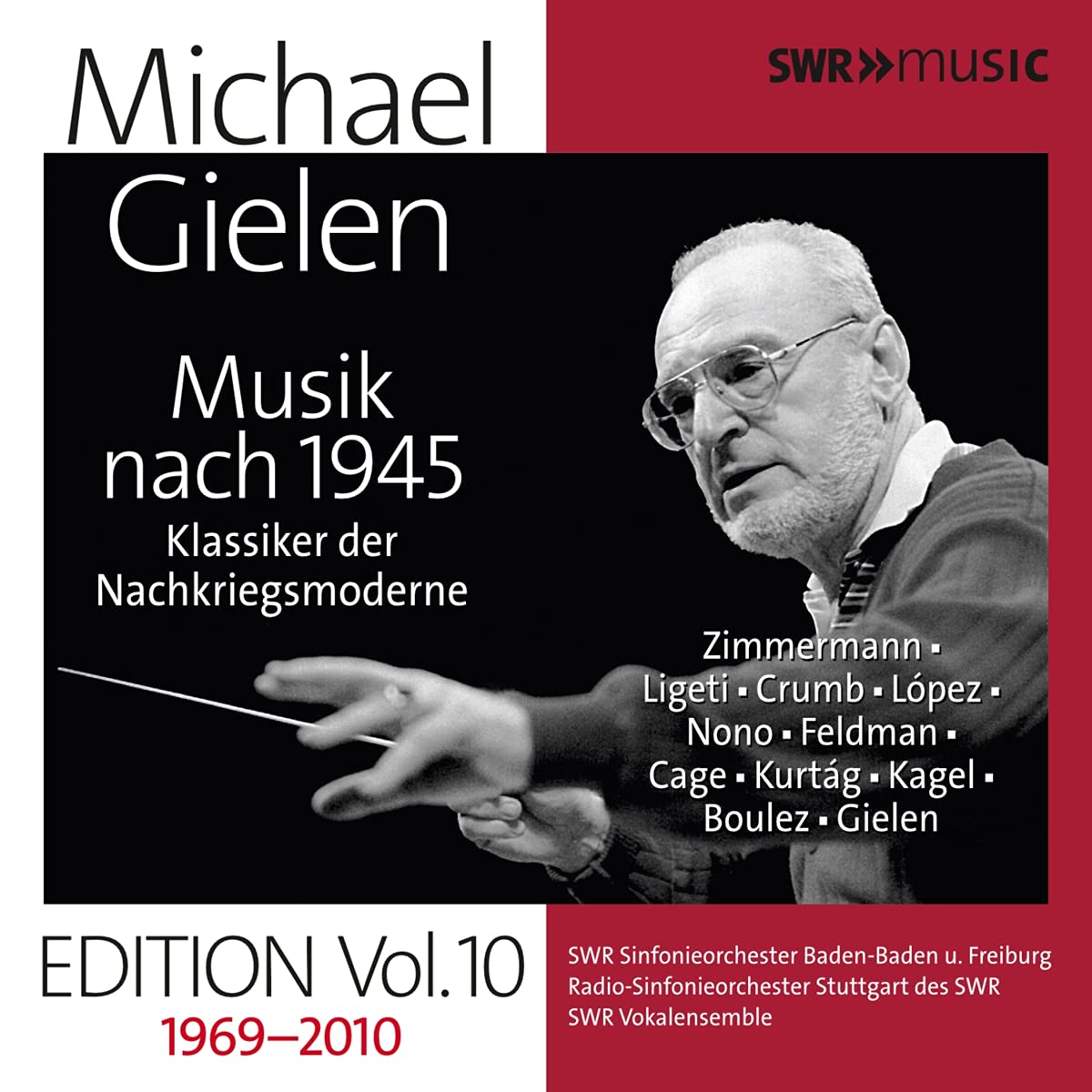
The tenth and final boxed set in SWR’s Michael Gielen Edition spotlights his considerable contributions to post-1945 concert music. Seven hours of live recordings of music by European avant-garde figures Pierre Boulez, Luigi Nono, György Ligeti, György Kurtág, Jorge E. López, Maurizio Kagel, and Bernd Alois Zimmerman and Americans Morton Feldman, John Cage, and George Crumb. Gielen’s own compositions are featured as well. Gielen (1927-2019) may not have been prolific, but proves to be a fine composer, one whose works should be considered for programming more regularly. Vier Gedichte von Stefan George (2010) (“Four Poems of Stefan George”) finds the SWR Vokalensemble joining a chamber segment of the SWR Sinfonieorchester in a performance that displays the virtuosity of both groups to excellent advantage. Pflicht und Neigung (1988) (“Duty and Inclination”) is imaginatively scored for a sinfonietta sans strings, with muscular percussion writing, crystalline wind chords, and eruptive brass lines. 


As the previous nine boxed sets of the Gielen Edition attest, he was a conductor who excelled in many different eras and styles of music-making. Still, Gielen’s championing of contemporary music is legendary, as are some of the performances included here. Bernd Alois Zimmermann’s Requiem für einen junge Dichter (1969) (“Requiem for a Young Poet”) has a particularly dark history that lends to the already harrowing nature of the work. Both the narrator, a pivotal performer in the piece, and Zimmermann himself committed suicide shortly after the Requiem’s premiere by SWR and Gielen. It has been widely debunked that Mozart was “writing his own Requiem,” but can one say that of Zimmermann’s riveting piece? Gielen reportedly wasn’t so sure. Ligeti’s Requiem (1965) is another selection that is a standout, with radiant singing of its tight clusters and affecting emotive delivery. Instead of the dizzying polyglot assemblage of myriad texts in the decidedly secular and even nihilistic Zimmermann piece, Ligeti uses portions of the Catholic Requiem liturgy as part of his postmodern setting. George Crumb’s Star Child (1977) is another textual amalgam, with references to Gnostic concepts of Advent and Apocalypse. As so frequently in Crumb’s work, his attention to declamation is only matched by imaginative and exquisitely detailed scoring. 


Having recently finished Nono’s collected writings, it was particularly wonderful to hear these fine recordings of his music. In the book, Nono mentions working out complex canons with Bruno Maderna as a focal point of his training, which he deploys here in Variazioni canoniche. His signature orchestral work, No hay caminos hay que caminar (1987) (“Walker, there is no path yet you must Walk”), and A Carlo Scarpa (1984), dedicated to the famous twentieth century architect, also represent Gielen’s staunch support of and insights into Nono’s work. 


Kurtág’s Stele (1994) is the piece that elevated his compositional career, and it remains one of his most durable works; SWR provides a rendition that could be the benchmark for a long time to come. Ein Brief (1986) (“A Letter”) by Mauricio Kagel is a piece for mezzo-soprano and orchestra that features angular vocalise and Schoenbergian harmony; it reads like an enigmatic sequel to Erwartung. 


The artistic breadth and consistently superior musicality of this set are extraordinary. Given their archival nature, listeners may be surprised at the fidelity of the recordings. Details are clear, and dynamic range is tremendous; the disc containing the pieces by Lopez even includes a warning to be careful of the dynamic extremes of the piece when choosing a volume level. The selections by this composer are all premiere recordings. Born in Cuba and an emigree to the United States, Lopez has for some years been a citizen of Austria, flying under the radar of much of the American musical establishment. His formidable scoring and the aforementioned extremes navigated by his music may also play a role. These prove to be right in Gielen and SWR’s wheelhouse; they make a case for Dome Peak (1993) and Breath-Hammer-Lightning (1991) as  compelling works that deal with a gargantuan spatial aesthetic.


Two of Pierre Boulez’s most important orchestra pieces are included here, Rituel in Memoriam Bruno Maderna (1975) and movements from the seemingly ever enlarging Notations (recorded in 1990, with an additional portion added in 2003). Rituel incorporates expressive gestures and formal bearing; it was truly a turning point piece for Boulez. Notations was a touchstone work emblematic of the composer’s willingness to build up and revise fragments of material throughout his lifetime. It is masterfully scored and tailor made for a detail-oriented Gielen. Once again, SWR displays extraordinary fluency in densely complex music.  


The late Feldman piece Coptic Light (1985) clocks in at nearly a half hour, which is short by the composer’s standards. It is still one of his most impressive essays, requiring 106 musicians to create a kaleidoscope of colors, staggered entrances, and off-kilter near repetitions. The Gielen set closes with another New York School piece, the totemic Concerto for Piano and Orchestra (1958), an audacious open form piece in which the conductor is literally a time-keeper, using his hands to indicate positions on the clock to move through the piece’s sections. The soloist’s part, written on single sheets, can be assembled in any order. Despite all of the chance procedures at work here, the SWR and Gielen understand the performance practice surrounding Cage’s output well, making clear that they are as equally at home in American experimental music as they are the European avant-garde. Highly recommended. 

-Christian Carey
 

Best of, CD Review, Composers, File Under?, Piano, Twentieth Century Composer

Best of 2021 – Piano Music

William Byrd and John Bull

The Visionaries of Piano Music

Kit Armstrong, piano 

Deutsche Grammophon CD


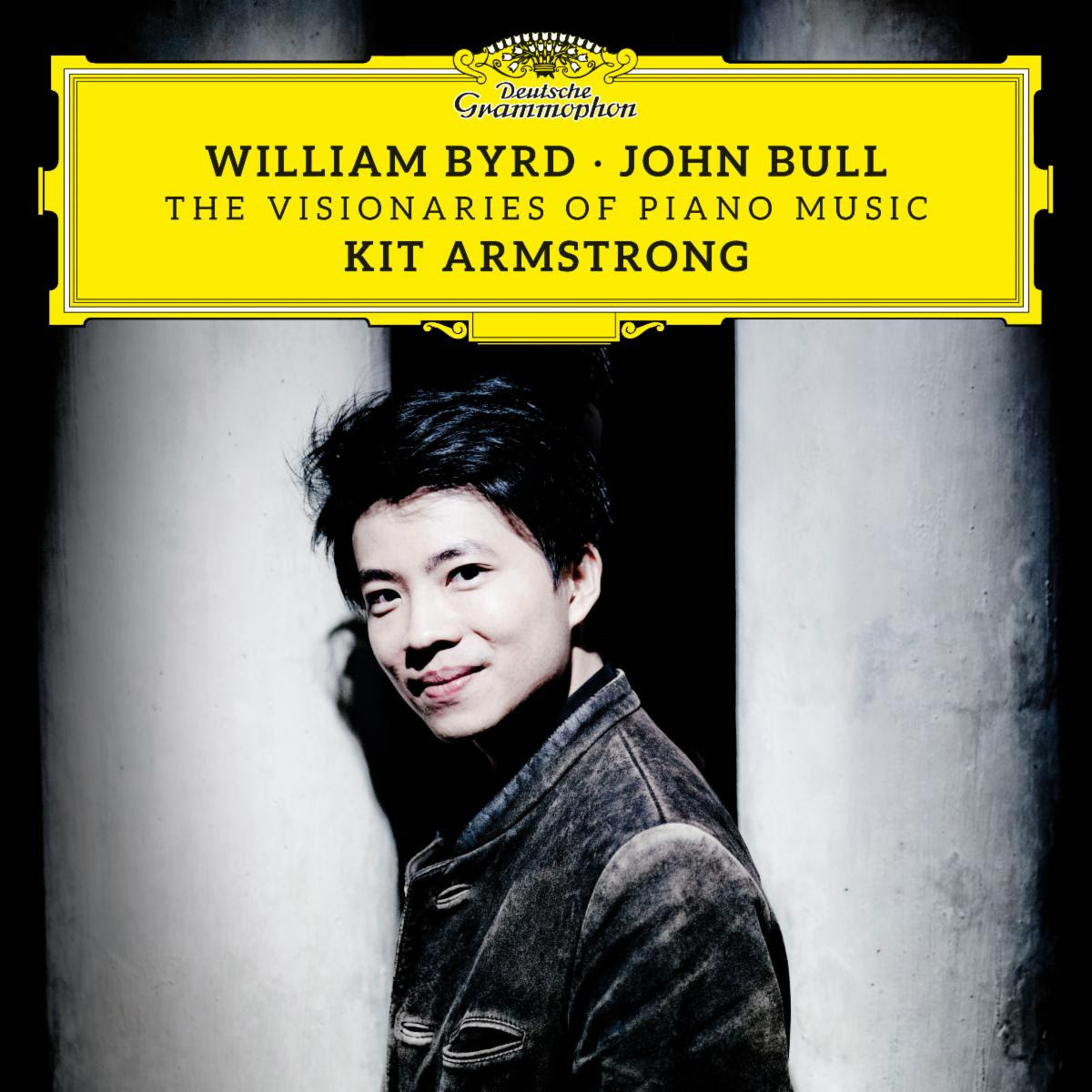
In The Visionaries of Piano Music, Kit Armstrong plays two of the greatest English keyboard composers active during the reigns of Elizabeth I and James I on the modern piano, aiming to show what he calls “a seamless line of development” between this repertory and more recent music written explicitly for the piano. William Byrd (ca. 1540-1623) and John Bull (ca. 1562-1628) wrote for very different instruments from the piano, the harpsichord and its smaller companion the virginal; Christofori developed early versions of the ‘pian e forte’ around 1700, and these were still a far cry from today’s instruments. Armstrong doesn’t pretend that a piano sounds like a harpsichord, but he observes phrasing and tempos that resemble period-informed performance. He excels at works like Byrd’s “The Battell: The Flute and the Droome,” in which each hand imitates an instrument. The dance music so prevalent among these works, pavans and galliards, is delivered with jubilant élan. 

Delving into the rich tapestry of piano music often begins with foundational music lessons that cultivate an appreciation for historical compositions and their evolution. Just as Kit Armstrong explores the seamless development from Elizabethan keyboard compositions to modern piano music, aspiring musicians can benefit immensely from structured music lessons. Institutions like Pianos & More offer comprehensive programs designed to introduce students to a diverse repertoire, from early keyboard works to contemporary compositions.

In these music lessons, students not only learn technical proficiency but also develop an understanding of historical context and performance practices. Much like Armstrong’s approach to interpreting Byrd and Bull’s compositions with sensitivity to historical instruments, music instructors at Pianos & More emphasize phrasing, dynamics, and the stylistic nuances that define each era of piano music.


Images

Claude Debussy, 

Complete Piano Music from 1903-1907

Mathilda Handelsman, piano

Sheva Collection


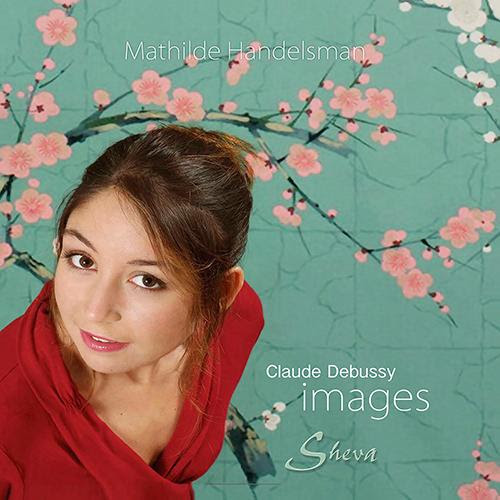
Claude Debussy wrote several pivotal works for piano from 1903-1907: Books 1 and 2 of Images, Estampes, Masques, D’un cahier d’esquisses, and L’isle joyeuse. Pianist Mathilda Handelsman creates eloquent recordings of some of the composer’s best work. In addition to her sculpted touch and excellent musical judgment, Handelsman has another ally, an 1875 Steinway that seems tailor made for ideal tone colors in Debussy, supplying a shimmering sound. Her approach to tempo variations, supple but subtle, lends this recording a magical aura.  


On DSCH

Works by Dmitri Shostakovich and Ronald Stevenson

Igor Levit

Sony Classical 3xCD


The 24 Preludes and Fugues, Op. 87, by Dmitri Shostakovich (1906-1975) are some of the most imposing piano works of the twentieth century. Igor Levit has distinguished himself on record both in watershed works by Bach and Beethoven and, on 2020’s Encounter, a mixed program of romantic music and Palais de Mari by Morton Feldman


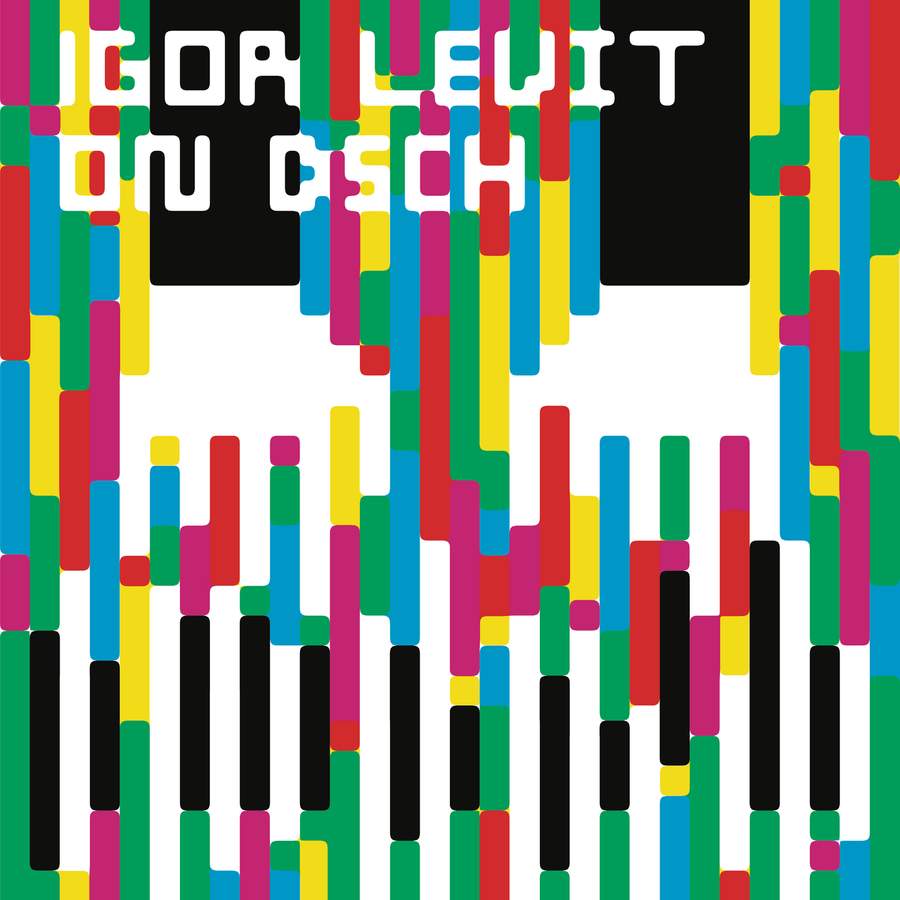
This 3-CD set includes Op. 87 plus the gargantuan 1962 work Passacaglia on D.S.C.H (Shostakovich’s musical signature – D, Eb, C, B), by composer-pianist Ronald Stevenson (1928-2015). Detailed voicing, such as the double octaves in the E major prelude, bring out the orchestral aspects of the music, while counterpoint found in at times lengthy and thorny subjects, as in the C# minor and F# minor fugues are clearly delineated. The B major fugue is bucolic and brilliantly rendered. The D minor Prelude and Fugue that culminates the set is probably Shostakovich’s best known solo piano piece. Under Levit’s hands, it is magisterial and impeccably paced. Stevenson is a figure who should be better known. Levit’s riveting account of the Passacaglia, which references both Bach and Shostakovich and a host of baroque variation and dance forms, rivals Stevenson’s own scintillating performances of the work. Kudos for reviving this compelling composition. 

For those inspired by Levit’s mastery and eager to delve deeper into the realm of piano music, exploring a diverse range of compositions becomes essential. Accessing sheet music through platforms like https://hsiaoya.com facilitates this journey, providing a convenient avenue to acquire scores and embark on enriching musical exploration. Whether it’s delving into the complexities of Stevenson’s compositions or venturing into other realms of piano repertoire, the availability of sheet music serves as a gateway to realizing one’s musical aspirations with greater ease and efficiency.


-Christian Carey


Best of, CD Review, File Under?, Piano, Twentieth Century Composer

Best of 2021: Messiaen on Kairos (CD Review)

Sequenza 21 – Best of 2021


Olivier Messiaen

Vingt regards sur l’enfant-Jésus

Alfonso Gómez, piano

Kairos CD


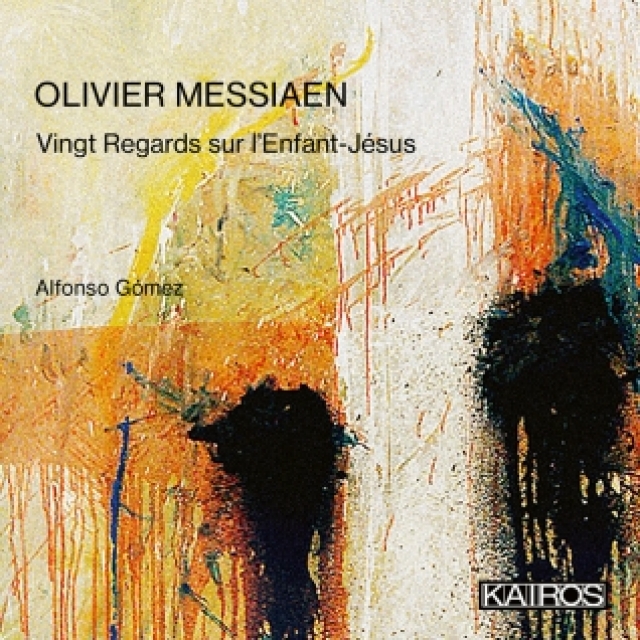
In 1944, Olivier Messiaen wrote a recital length work (about 2 hours in duration) for pianist Yvonne Loriod, one of his proteges and, later, his spouse. Vingt regard sur l’enfant-Jésus (“Twenty Visions of the Infant Jesus”) widely encompasses the techniques of Messiaen’s musical language and epitomizes the importance of religious contemplation and corresponding symbolism in his work. Where some Christmas music takes a sentimental approach to regarding the infant Jesus, there is none of that here. Instead, Vingt regards explores the awe inspiring power of this event, with music that ranges from ecstatic joy (Noël) to prayerful reverence (Le Baiser de-l’Enfant Jésus) to fear of the abyss. 


Messiaen was quick to point out that, while religious symbolism and belief were intrinsic to his creativity, believers and non-believers alike could be moved by his music. However, his intimate knowledge of scriptural symbolism is intrinsic to Vingt Regards and is well explicated in Meinrad Walter’s lucid booklet notes. The movements are interconnected in a number of ways. The modes of limited transposition are the building blocks of the pitch material, and the composer’s characteristic birdsong is also present in many places, with great eloquence in Regards de la Vierge. Messiaen pointed out a particular chordal motif that is frequently present at pivotal points, as well as a God theme, a theme of the Star and the Cross, and a theme of Mystical Love, helping to bind Vingt Regards together. Correspondingly, his interest in syncopation and mixed meters abets the livelier sections, with complex yet exuberant dance music, as in Regard de l’esprit de joie, and in Par lui tout a été fait. In addition to Trinitarian formulations, Messiaen pays special attention to the Virgin Mary. Indeed, Première Communion de la Vierge (“First Communion of the Virgin”) is one of the most moving portions of the piece.


There are a number of recordings of Vingt Regards, but Alfonso Gómez proves to be an individual and distinctive interpreter, skilful in navigating the piece’s many challenges and expressive details. Aphoristic sections like L’Echange and Regard des hauteurs , are provided with incisive clarity of gesture, the latter’s birdsong practically evoking a grove of avians. Where Gómez truly thrives, though, is in the longer movements, where he shapes the juxtaposition of motives to underpin vivid textures. His rendition of the piece’s final movement, Regard de l’église d’amour (“Contemplation of the Church of Love”)  knits together many threads of the essential material of Vingt Regards, providing a sophisticated and powerful conclusions to this towering example of 20th century pianism. 


Choral Music, File Under?, Twentieth Century Composer

Penderecki’s Passion: a new recording

Krzysztof Penderecki

St. Luke Passion

BIS Records

Sarah Wegener, soprano; Lucas Meachem, baritone; Matthew Rose, bass

Sławomir Holland, speaker

Warsaw Boys’ Choir; Kraków Philharmonic Choir

Orchestre symphonique de Montréal, Kent Nagano, conductor

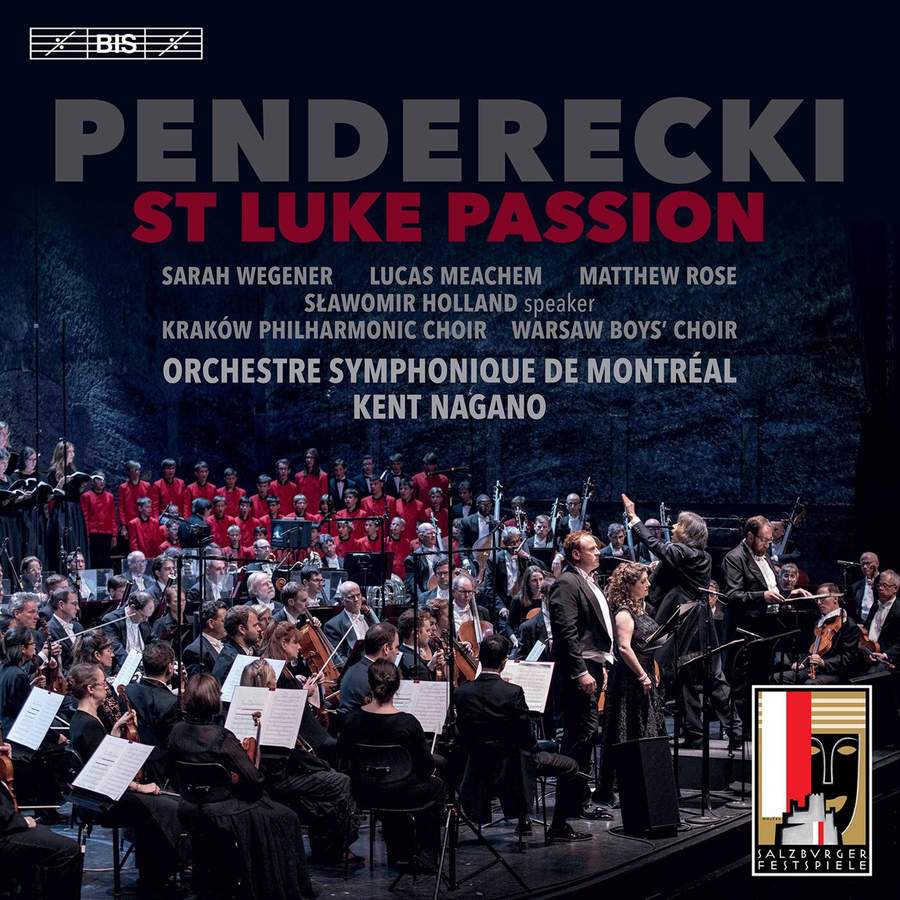
Krzysztof Penderecki’s St. Luke Passion (1966) garnered international acclaim that raised the composer’s stature substantially. Penderecki had a long relationship with the Orchestre symphonique de Montréal, appearing with them a number of times as a guest conductor from 1979-2015. The orchestra gave the Canadian premiere of St. Luke Passion with Nagano conducting. This live recording was made at the Felsenreitschule Salzburg Festival in July, 2018 with the composer in attendance. 

At the time of its premiere, there also were undercurrents of criticism on two fronts. The musical avant-garde pilloried Penderecki for his eclecticism, which ranges from triads to twelve-tone rows (two are used in the piece) to cluster chords and a prominent use of the B-A-C-H motive. In retrospect, one can evaluate the work as a precursor to the polyglot postmodern assemblages of the 1970s. Others decried the use of such devices in a liturgical piece of music. Despite these critiques, the work has weathered well. 

Throughout, there is a powerful sense of declamation by both the soloists and chorus. Soprano Sarah Wegener’s voice supplies thrilling high notes with abandon while baritone Lucas Meachem displays a richly powerful voice and bass Matthew Rose an impressive lower register. Perhaps most impressive is Slawomir Holland’s potent delivery as a speaker. The choruses are superlatively well prepared, their singing mixing thick chords and stentorian high notes as well as swirls of group spoken word passages. Concomitantly a fluidity between styles and idioms prevails.Sprechstimme morphs quickly into detailed harmony, micropolyphony mixes with quotation and tonal signatures. 

Nagano leads the Montréal musicians through an assured and nuanced account of the score. In the wake of Penderecki’s passing, this recording comes at a propitious time to reevaluate his compelling early work. 

-Christian Carey

Composers, Concerts, Contemporary Classical, File Under?, Music Events, New York, Twentieth Century Composer

Urban Playground Gives New York Premiere of Florence Price Violin Concerto No. 2 (Concert Preview)

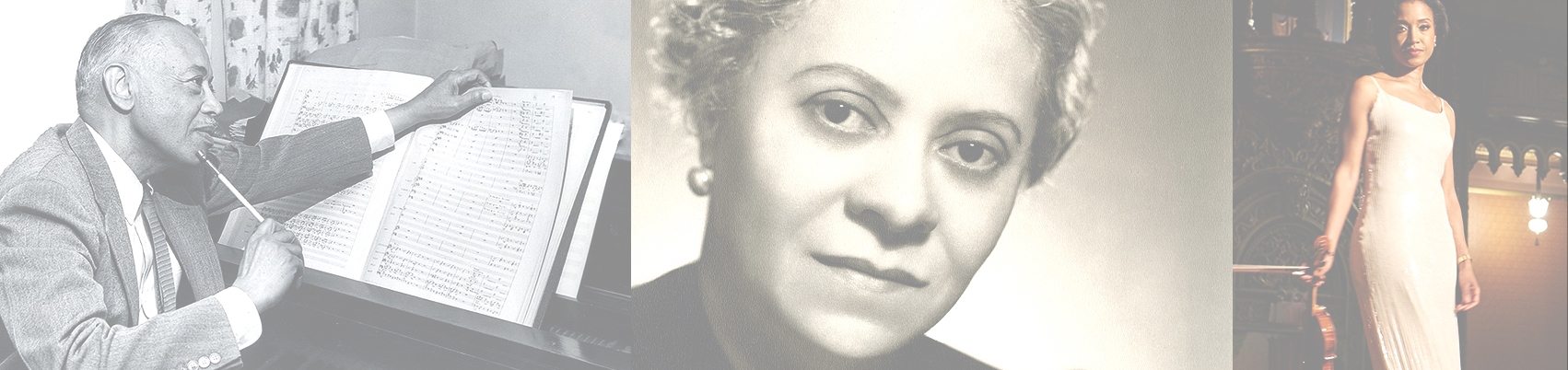
On Wednesday May 8th, Urban Playground Chamber Orchestra presents the New York premiere of Florence Price’s Violin Concerto No. 2, music by Harry T. Burleigh,  and a rarely heard oratorio, And They Lynched Him on a Tree, by William Grant Still. The program, titled From Song Came Symphony. fits the ensemble’s mandate to prioritize the performance of composers who are women and people of color. It focuses on the legacy of Burleigh. I recently caught up with UPCO’s conductor Thomas Cunningham, who told me more about the concert.


Cunningham says, ”I found programmatic inspiration in Jay-Z lyrics: Rosa Parks sat so Martin Luther could walk / Martin Luther walked so Barack Obama could run / Barack Obama ran so all the children could fly.”

“Burleigh wrote art songs so that the following generation – William Grant Still, William Dawson, and Florence Price – could write symphonies and concert works. Burleigh’s incorporation of African American music into Western art music, and his advocacy for this new American music genre through his work at Ricordi, had a vast influence on remarkable composers of color in America.”


Florence Price’s work has recently been receiving significant attention. Cunningham feels that Violin Concerto No. 2 will be a highlight of the concert. “Price’s second violin concerto is wonderfully idiosyncratic. The concerto is in so many places defined by its subtle and yet robust brass writing, atypical especially for a concerto for string instrument. All the while, this work demonstrates a novel voice, both aware and in touch with various traditions, but carving out singular nuance and identity.”


UNC-Chapel Hill Ph.D. candidate Kori Hill will deliver a pre-concert lecture at the event. Of Price’s work, she says, “This concerto, completed just one year before Price’s untimely death in 1953, is a fascinating example of her applications of African American vernacular and Western classical principles. It is an important component to understanding and fully appreciating her contributions to American classical music. We hope Price’s Violin Concerto No. 2 becomes a staple of the violin repertory in the years to come.”


In addition to the aforementioned works, the program also includes a movement from Dvorak’s Ninth Symphony. Cunningham says that the included excerpt is connected to multiple pieces on the program. “Incorporating the Largo from Dvorak 9 serves a dual purpose: first, to demonstrate the tangible connection between the spirituals sung by Burleigh to Dvorak, and second, to mirror the premiere of Still’s And They Lynched Him on a Tree, which also included the movement.”

This is the fifth year that UPCO has been active. Their advocacy is laudable, and the group has musicianship to match its ambition. Cunningham and company are persuasive performers of both standard-era repertoire and more recent music. May 8th’s concert should be a memorable one.


Event Info

Urban Playground Chamber Orchestra and Harry T. Burleigh Society present


From Song Came Symphony

Wednesday May 8th at 7:30 PM

Langston Hughes Auditorium

Schomburg Center for Research in Black Culture

515 Malcolm X Blvd.

New York, New York 10037


Tickets


CD Review, CDs, Contemporary Classical, File Under?, jazz, Twentieth Century Composer

Anna Webber: Clockwise

Anna Webber

Clockwise

Pi Recordings (2019)

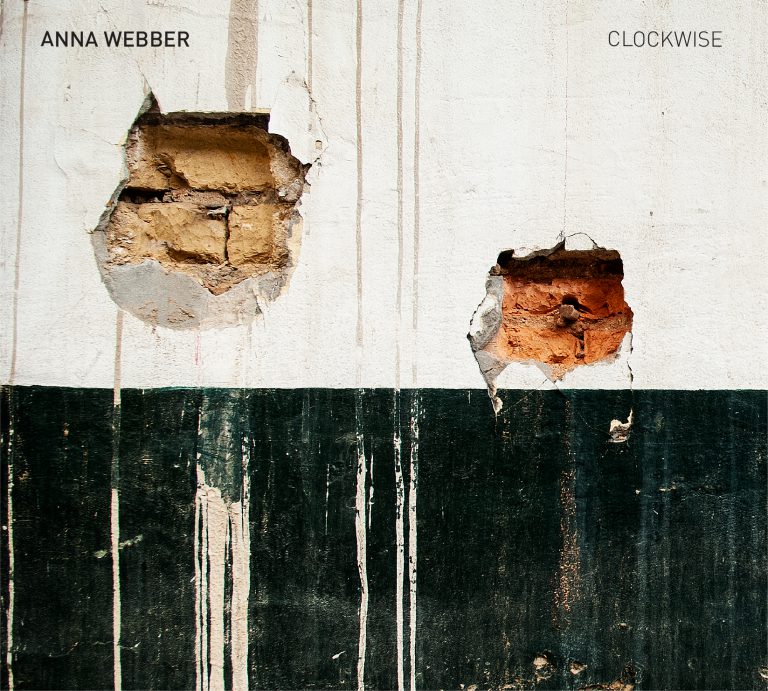
Saxophonist/flutist/composerAnna Webber, a thirty-five-year-old who has already won a Guggenheim Fellowship and numerous other plaudits, makes her Pi Recordings debut with Clockwise.Joined by an estimable group of avant-jazz musicians – pianist Matt Mitchell, Jeremy Viner playing tenor saxophone and clarinet, trombonist Jacob Garchik, cellist Christopher Hoffman, bassist Chris Tordini, and percussionist Ches Smith-Webber plays tenor saxophone and flute on the CD. Her compositions are mostly extrapolations of pieces for percussion by twentieth century classical composers Morton Feldman(King of Denmark), Iannis Xenakis(Persephassa), Edgard Varése(Ionisation), Karlheinz Stockhausen(Zyklus), Milton Babbitt(Homily), and John Cage (Third Construction). Employing percussion music to organize musical structures yields fascinating and fertile hybridized compositions.

Array, based on Babbitt’s Homily, a solo piece for snare drum, uses the score’s serialized dynamics and attack points to craft a welter of overlapping arpeggiations inhabited by the entire group. King of Denmark is visited in three different incarnations on Clockwise, the first lifting off with a bracing hail of noise-inspired multiphonics before moving into an undulating groove that positions the rhythm section front and center. The second features an introduction in which Smith plays glissandos on timpani alongside chiming interjections. This is succeeded by a sultry main section, pitting walking lines from Tordini against microtonal winds. King of Denmark III is the briefest trope on Feldman, juxtaposing a roiling arco solo from Tordini against saxophones overblown.

The title track takes the modularity of Stockhausen’s original as a cue for its own set of disparate, time-linked sections. Cage’s Third Constructionis channeled on Hologram Best, which features angular saxophone and brass lines in ebulliently spinning motion. Idiom II is the sole track on the disc to be composed with Webber’s own material. Near unison saxes, just slightly out of sync, create a loping tune that is punctuated by thrumming percussion and bass notes. Gradually, the rhythm section exerts a more intrusive presence that rivals the saxophone ostinato. Ultimately, the head is banished in favor of a saxophone-piano duet, in which Mitchell plays from an attractive palette of complex harmonies. Inexorably, the saxophones push back. Now no longer in near-unison, deployed in counterpoint, they take a break of their own that is only gradually infiltrated by the rhythm section. The final section of the piece features ostinatos again, this time with blocks of reeds, harmonizing the original tune, taking the front line in the proceedings while the rhythm sections positively roars its propulsive support. A brief reappearance of the head ensues, and then the door slams shut on the most compelling music of the recording.

Varése and Xenakis inspire the works Kore I and Kore II. The latter opens the disc with undulating pizzicato strings that are eventually joined successively by flute, piano, and the rest of the ensemble in an off-kilter, post-tonal dance. Kore I closes the recording with another pileup of material, starting from pianissimo feints from the rhythm section and eventually building to a portentous moto perpetuo in which solos from Tordini, Webber, and Garchik are finally subsumed into a furious tutti coda.

Whether Webber is exploring avant-garde classical masters or paving her own pathways, she proves to be a compelling creator. Her collaborators, to a person, are stellar. Clockwise is heartily recommended.


CD Review, Composers, Concerts, Contemporary Classical, Electro-Acoustic, File Under?, New York, Orchestras, Philadelphia Orchestra, Twentieth Century Composer

Philadelphia Gives New York Premiere of Van der Aa’s Violin Concerto

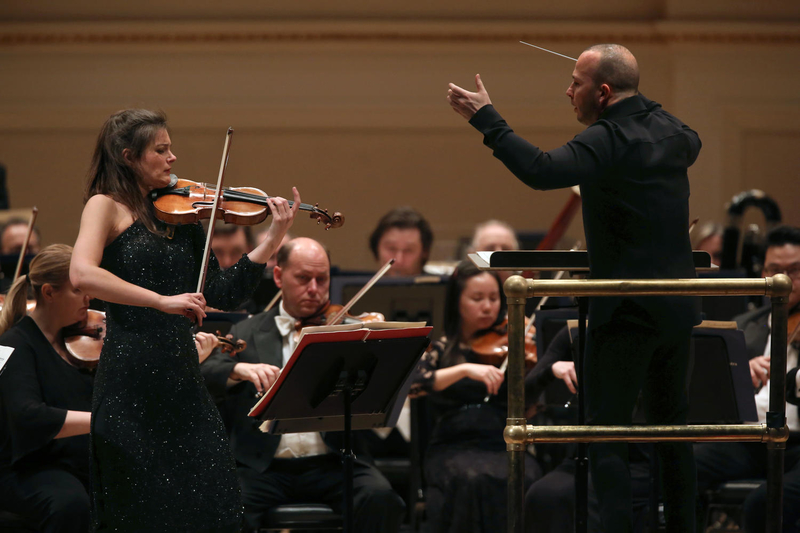
Violinist Janine Jansen performing with conductor Yannick Nézet-Séguin and The Philadelphia Orchestra at Carnegie Hall, 3/13/18.
Photo: Steve J. Sherman


New York Premiere of Van Der Aa Violin Concerto

The Philadelphia Orchestra

Yannick Nézet-Séguin, Music Director and Conductor

Janine Jansen, Violin

March 13, 2018

Carnegie Hall

Published on Sequenza21.com

By Christian Carey


NEW YORK – Dutch composer Michel Van der Aa (b. 1970) is best known for his imaginative and formidably-constructed multimedia works that incorporate both film and electronics. Notable among these are the operas Blank Out (2016) and Sunken Garden (2012), as well as a music theater work based on Portuguese writer Fernando Pessoa’s The Book of Disquiet (2008). Even pieces for acoustic ensembles, such as the clarinet chamber concerto Hysteresis (2013), have frequently incorporated electronics as part of their makeup. Thus, when Van der Aa composed his Violin Concerto (2014) for soloist Janine Jansen and the Royal Concertgebouw Orchestra, the absence of electronics was significant. (Interestingly, after the success of the concerto, his follow up piece for orchestra, Reversal (2016), also abstains from the electronic domain).  However, even in the analog realm, Van der Aa incorporates a sound world that acknowledges his interest in decidedly non-classical elements.


The score indicates that the solo violin part should be played with the vibrato, portamento, and usual techniques common to the instrument in contemporary concertos. The accompanying strings however, are asked to refrain from using vibrato in sustained passages, creating a kind of sine tone effect. Various styles are incorporated in the solo part, from bluegrass fiddling to more angular contemporary passages. Other aspects of the orchestration hearken to pop music terrain: near the end of the first movement, for instance, a climax approaches house music in its boisterous brass and percussion.


On March 13th, joined by Jansen, the Philadelphia Orchestra, conducted by Yannick Nézet-Séguin, delivered an energetic and assured performance of the concerto at Carnegie Hall. The violinist played with the supreme confidence of a soloist who has endeavored to make a work entirely her own. With its variety of solo demeanors, both shaded and nuanced and explosive and mercurial, Van Der Aa’s Violin Concerto seems the ideal vehicle for Jansen’s multi-faceted artistry. The Philadelphians matched her playing with equal confidence, with strings sensitively taking up the “sine tone” accompaniment of the sostenuto passages and winds, brass, and percussion gamely taking on roles in the electronica mimicry of wide swaths of the piece. Interpretively speaking, Jansen and Nézet-Séguin were on the same page throughout. In a dramatic conclusion to the piece, the violinist played her last gesture nose to nose with the conductor, eliciting surprised exhalation and then sustained applause from the audience.


Sergei Rachmaninov’s Second Symphony is one of my favorite of the composer’s works and I have seen a number of performances of it in concert. While I might quibble here or there with Nézet-Séguin’s tempo choices, the conductor’s tendency to press ahead during the potentially “schmaltzy” moments of the piece rendered it free of several layers of sentimental “varnish:”  still emotive yet utterly fresh-sounding. The Philadelphia Orchestra’s strings are justly renowned and were exemplary here, but the winds, brass, and percussion each contributed in both spotlight and ensemble moments as well. Thus, it was a touching exchange onstage when the conductor insisted on walking out to each of them in turn, bestowing embraces and well-earned praise.


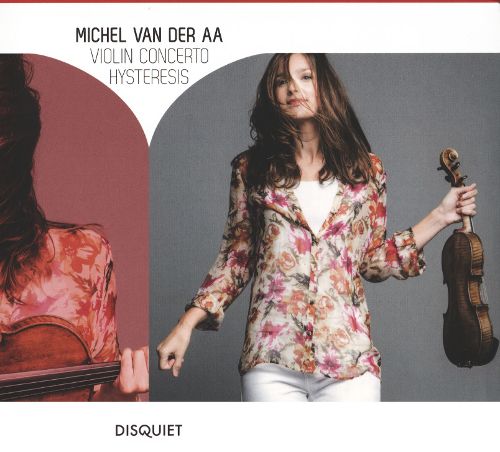
Jansen and the Royal Concertgebouw Orchestra, conducted by Vladimir Jurowski, have recorded Van Der Aa’s Violin Concerto for Disquiet Media. It is paired with the aforementioned Hysteresis, performed by Amsterdam Sinfonietta, directed by Candida Thompson, with Kari Krikku as soloist. The performances are detailed and evocative, giving an excellent sense of the composer’s approach to ensemble works. One hopes that both the recent high-profile performances of the Violin Concerto and this persuasive recording prove inviting to other soloists and ensembles: Van der Aa’s work is worthy of wider currency.


CD Review, Cello, File Under?, Orchestral, Twentieth Century Composer

Perle Orchestral Music on Bridge (CD Review)

George Perle

Orchestral Music 1965-1987

Jay Campbell, cello

Seattle Symphony, Ludovic Morlot, conductor

George Perle Vol. 4, Bridge Records 9499


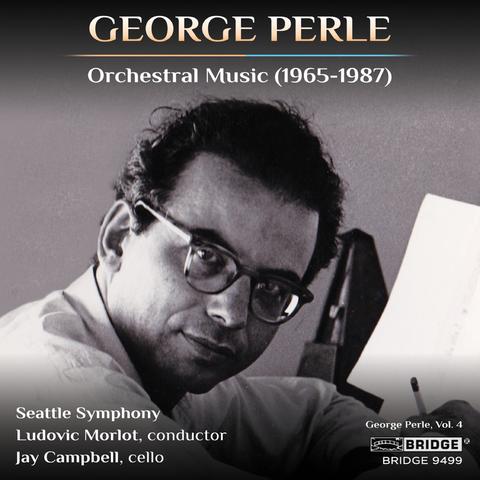
A recording of five previously unrecorded pieces, Orchestral Music 1965-1987 supplies excellent renditions of an underserved segment of composer George Perle’s output. Best known for his chamber music – he received a Pulitzer for his Wind Quintet No. 4 – Perle (1915-2009) also had significant orchestra commissions, including a residency with San Francisco Symphony and a 150th anniversary commission from the New York Philharmonic. Those who know his work as a music theorist will also be aware of his significant contribution to the field of 12-tone theory, as well as publications on his own idiosyncratic compositional method, “12-tone tonality.” The latter practice, with its use of carefully cultivated chromatic collections that obliquely refer to pitch centers, is fully on display in lithe and elegantly proportioned works such as Dance Fantasy (1986) and Sinfonietta 1 (1987). A bit more astringent in harmonic language are Six Bagatelles (1965), which seem indebted to Alban Berg, a touchstone figure for Perle, in their use of forceful angularity.


An intriguing entry on the disc is Short Symphony, 1980, which seems to be something of a response to Copland’s own, early and modernist in design, work by that name. The contrapuntal nature of its woodwind components recall some of Perle’s best chamber music. Elsewhere the orchestration is more muscular, with heraldic brass and rich passages for strings. Short Symphony display the composer’s consummate craftsmanship.


The standout piece on the disc is the Cello Concerto (1966), played with suppleness and impressive virtuosity by soloist Jay Campbell (also of JACK Quartet). The Seattle Symphony, under the estimable leadership of Ludovic Morlot, plays with both verve and precision. The finale is particularly varied in its demeanor, contrasting fluid cello solos with complex chords and supple wind duos, and forceful brass punctuations. It neatly resolves the well-known issue of balance in a cello concerto by bridging solos, small sections in counterpoint, and full orchestral interruptions to create a form where cello and ensemble eloquently coexist. One could readily see this piece having a substantial rebirth, particularly if Campbell continues to serve as its persuasive champion.

CD Review, Chamber Music, Contemporary Classical, File Under?, Guitar, Strings, Twentieth Century Composer

Best Chamber Recording 2017

Dark Queen Mantra


Terry Riley and Stefano Scodanibbio

The Dark Queen Mantra

Del Sol String Quartet; Gyan Riley, guitar

Sono Luminus


On this Sono Luminus CD, Terry Riley’s chamber works are superlatively performed by Del Sol String Quartet. Joined on the title piece by the composer’s son, guitarist Gyan Riley, the group navigates an array of rhythms, many of Spanish origin. Movement titles evoke the Basque region Vizcaino and the paintings of Goya. The final, eponymous, movement builds to an intense conclusion; Gyan Riley incorporates distortion and high volume, matching the whirling dance of the quartet in a rock-inflected finale.


Stefano Scodanibbio, who died in 2012, was a friend to both Rileys. Diamond Fiddle Language (Wergo, 2005), his collaboration with Terry Riley, is a standout in both of their respective catalogues. After his passing, Gyan Riley presented a memorial concert of Scodanibio’s music at New York’s The Stone. He invited Del Sol to play the composer’s Mas Lugares ( su Madrigales di Monteverdi), a work they have since made their own. A five-movement homage to the early Baroque master, Scodanibbio takes his source material on all sorts of fascinating of twists and turns. A virtuoso bass-player himself, Scodanibbio wrote prolifically and eloquently for strings. Channeling and transforming early music was only one aspect of his work – he was well known for extended techniques and as a formidable improviser. This is reflected in Mas Lugares … : The piece isn’t a neoclassical take on its source material. Instead, it is a persuasive update with considerable refashioning.


Originally premiered by Kronos Quartet, The Wheel and Mythic Birds Waltz is more of a minimalist affair than The Dark Queen Mantra. That said, few of Terry Riley’s pieces for quartet are unadulterated minimalism – apart from In C, his is a polyglot musical language. There are a considerable number of extended chords, folk-like melodies, and jazz-inflected wrinkles amid the repetitions. As such, the piece pairs well with the other two on the CD, and serves as a fitting closer.

The Dark Queen Mantra is Sequenza 21’s Best Chamber Recording 2017.

Concerts, Contemporary Classical, File Under?, New York, Piano, Twentieth Century Composer

Thursday: Sarah Cahill plays Harrison at LPR

Pianist Sarah Cahill appears at LPR on April 6th at 7 PM as part of her tour celebrating the music and birth centenary of composer Lou Harrison. She and I touched base earlier this week as she was preparing for her trip to the Northeast.


Hi Sarah. Thanks for taking time to talk with Sequenza 21. Which was the first Lou Harrison piece you played? When were you first aware of his music?


I don’t remember the first piece I played, but I became interested in him because of my fascination with Henry Cowell and Ruth Crawford and that circle of early 20th century American experimentalist composers.  And in the Bay Area, where I live, there’s a profound affection and devotion to Lou Harrison everywhere.  He taught at Mills College for many years, and lived fairly close by, in Aptos, and worked with many musicians I’m close to, including Larry Polansky, Robert Hughes, Jody Diamond, Willie Winant, Phil Collins, Julie Steinberg, and many others.


What was it like working with Harrison on his pieces? Tell us about the piece that you premiered.


I premiered a piece called Festival Dance for two pianos, with the pianist Aki Takahashi, at Cooper Union in 1998.  It’s a piece Lou Harrison wrote in the 60s and had never been played.  He was such a gracious person, always kind-hearted and relaxed.  He wanted us to emphasize the melodic line.


At LPR, you will be playing ‘Party Pieces.’ What was the collaborative process like in this composition – how did the “exquisite corpse” concept play out in the musical domain?


Lou Harrison, Virgil Thomson, John Cage, and Henry Cowell met frequently in Lou Harrison’s loft on Bleeker Street between Sixth and Seventh Avenues in about 1944 or 1945.  Lou Harrison explains it best: “Each composer present would write a measure, fold the paper at the bar line and, on the new fresh sheet, put only two notes to guide the next composer in his connection.  The next composer would write a bar, fold at the bar line and leave two more black spots and so on.  It seems to me that we would begin simultaneously and pass them along in rotation in a sort of surrealist assembly line and eagerly await the often incredible outcome.”  Last month I visited the Lou Harrison archives at UC Santa Cruz, with Lou’s great friend, composer/conductor/bassoonist Robert Hughes, and made copies of some of the manuscripts with my cell phone.  I’ll give copies to the audience at my concert on Thursday evening.


What are some of the other pieces you are playing at LPR?


I’m starting with two unpublished Lou Harrison pieces, Range-Song and Jig, that pay homage to his teacher and friend Henry Cowell, who was in San Quentin at the time, with Cowell’s famous chord clusters.  Then a movement of Cowell’s own Rhythmicana, dedicated to Johanna Beyer, so then I’ll play a short piece from Beyer’s Dissonant Counterpoint.  That will lead to the Conductus from Harrison’s Suite which he wrote while studying with Schoenberg (with a twelve-tone row).  Then a short piece by James Cleghorn, who was Harrison’s friend who suggested he take classes from Henry Cowell.  His son Peter Cleghorn will be in the audience to introduce that piece.  Then a pair of pieces, both composed in 1946 for a performance by the choreographer Jean Erdman: Lou Harrison’s The Changing Moment, not heard in New York since 1946, and John Cage’s Ophelia.  Both compositions reveal some of the emotional disturbance and identity crisis that affected both composers at the time.  Then a movement of Frank Wigglesworth’s Sonatina, and ending with the wonderful Summerfield Set that Harrison composed in 1988.  At LPR I have to stick to a sixty-minute program– otherwise I could go on and on and on with Lou Harrison and his circle, because there are lots of fascinating connections.


Tell us about the concerto? What was Harrison’s approach to orchestration in this piece primarily Western in conception, or does it incorporate non-Western instruments/allusions/tuning, etc.?


Lou Harrison’s Piano Concerto is one of the great concertos of the 20th century.  It’s gorgeous and epic and should be played a lot more often.  The piano is retuned in a Kirnberger tuning, as are sections of the orchestra.  There’s a great battery of percussion.  


What else is going on for you this season?


Later in the year I’m playing Lou Harrison’s great Concerto for Piano and Javanese Gamelan at MIT and at the Cleveland Museum of Art, and also playing a program of his piano works on three different instruments– equal tempered piano, tack piano, and piano in Werckmeister 3– in Tokyo and Fukuoka, at the invitation of the extraordinary composer Mamoru Fujieda.  I’m learning Messiaen’s Visions de l’Amen for next year, and Takemitsu’s Quotation of Dream (Say Sea, Take Me!) to perform at Interlochen in July.  And next month I’ll get to play Lou Harrison on Maui and the Big Island, along with Tania Leon, Ruth Crawford, George Antheil, and many others, at the invitation of a marvelous composer, Robert Pollock, who runs a concert series there.

Thanks again.

Thank you!

Sarah Cahill’s April-May 2017 Lou Harrison Tour Schedule

(Fall 2017 Lou Harrison tour dates will be announced in May 2017)


Solo Recital | Le Poisson Rouge | NYC
April 6, 2017 at 7pm
Link: http://lpr.com/lpr_events/lou-harrison-centennial-sarahcahill-april-6th-2017/

MicroFest North: Iconoclasts at 100 | Center for New Music | San Francisco, CA
May 7, 2017
Link: http://centerfornewmusic.com/calendar/

FULL: Harrison | Berkeley Art Museum | Berkeley, CA
May 10, 2017 at 7pm
Link: http://www.bampfa.berkeley.edu/program/full-2017-music-performance

Lou Harrison Centennial Celebration | New Music Works | Santa Cruz, CA
May 14, 2017 at 3pm and 7pm
Link: http://www.brownpapertickets.com/event/2721368

Solo Recitals | Ebb and Flow Arts | Hawaii
May 20-21 2017
Link: http://ebbandflowarts.org/