Contemporary Classical

Click Picks, Contemporary Classical, Events, Online, Radio, Women composers

Merry Xmas, Happy New Year and VIVA 21st-century Women

Full of food and drink, playing with those presents, a couple days now to relax… How about capping the holiday huddled around the warm, cozy glow of the old ‘puter?

Because this Sunday the 27th, beginning at 1900 (7pm) EST and running all the way until Monday evening at 1900 (7pm) EST, our new-music radio host-with-the-most Marvin Rosen is having his annual Viva 21st-Century – Women Composers Edition 24-hour broadcast marathon. We’re talking all-women, all-the-time, and all things written only from 2000 ’till today! You’re bound to be enlightened, and possibly even amazed, with much of what you’ll hear. Your geography doesn’t matter either, because wherever you’re at you only need click to WPRB’s live stream and you’re good to go.

So pay a visit; your ears will thank you. And if inclined give a shout to Marvin himself for pushing himself to push this music, and so push you into a greater awareness of all the wonderful stuff being written by women composers in the here and now. (Marvin sez: “Wake up phone calls during this marathon will be welcome“…)

Contemporary Classical

Pacem in Terris

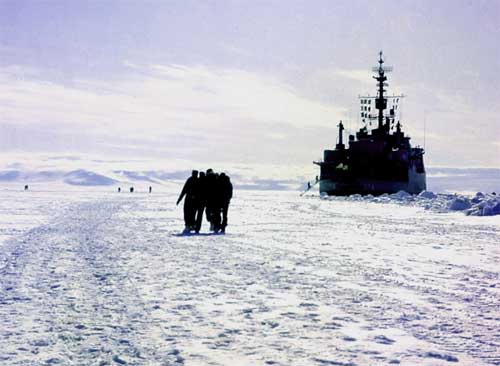
mcmurdoI took this picture at McMurdo Sound, Antarctica around 3 a.m.  on December 25, 1966 as  some of my shipmates and I made our way back from the McMurdo “Playboy Club” to the U.S.S. Atka, a Navy icebreaker that no longer exists.  Given the other military options available to young men on that date, it was not a bad place to be.  This rather surreal tableaux of drunken comraderie  illustrates, I think, a dirty little secret known to all men and a few women and that is that men–especially hetrosexual men who have worked, lived and played together under difficult circumstances–love each other best.

Contemporary Classical

A Visit from J. S. Bach

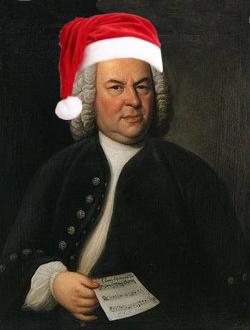
I hesitate to repost Bach-Santathis again, but I find that the links that Google turns up are mostly dead, and some of you seem to like it.  So, with best wishes for a happy holdiay season, and without further ado, I give you:

A Visit From J.S. Bach

By Galen H. Brown,
(With apologies to Henry Livingston, Jr.)

‘Twas the night before Christmas, when all through the city
The critics were trying their best to be witty;
They printed their lists of the past year’s best fare,
In hopes that their trendy young readers would care;
But the readers were nestled all snug in their beds,
While vacuous pop idols danced in their heads;
And the Maestro in PJs, and I in my drawers,
Had just settled in to examine some scores,
When out on the lawn, such cacaphonous sound,
I sprang from my desk thinking Zorn was in town. (more…)

Contemporary Classical

Sequenza21 Best of the Decade

It was a time of list-making and so they made a list–the most important new musical works of an otherwise shitty, miserable decade.  I’ll begin:

1.  La Pasión según San Marcos (2000) Osvaldo Golijov

5. The Little Match Girl Passion David Lang

10. Paradiso Jacob ter Veldhuis

Your turn.

Update 1:

3. September Canons (2002) Ingram Marshall – An incredibly powerful 9/11 remembrance made transcendent by Todd Reynolds’ performance.

Click Picks, Contemporary Classical, New York, Radio

Q2 to you too

WNYC’s acquisition of New York radio’s stalwart WQXR was a win/lose proposition. Win, in that a major classical station would stay alive; lose in that the new assigned frequency (which can conflict with a powerful Connecticut station on the same frequency) and reduction in broadcast power (from 6,000 watts to only 600 watts) reduces its reach by some millions of potential listeners. Not that it matters much to me, parked on my hiney here in Houston; I and so many others simply go online to hear the station’s stream, anywhere and anytime.

And a further win: Besides the station’s main — and predictably staid — broadcast stream, WQXR also carries another, different  internet-only stream called Q2. The music there reverses the current classical-radio standard: i.e., instead of mostly old and safe with a few tiny nuggets of the new, Q2 plays quite a bit new with far fewer chestnuts from classical music’s Ancient Dead Guys Club.

In the past few hours of this morning you could have been listening to Glass, Rautavaara, Ter Veldhuis, Torke, Greenstein, Part, with a just bit of Falla, Palestrina and Chopin sprinkled through for good measure. I know this because they have a great real-time updated playlist page, so you’ll never have to wonder what that work you just heard was. Q2 is just finishing a week-long Steve Reich celebration, and while you’re a bit late for the music you can still read and hear all kinds of interviews about the music from a range of artists, as well as tons from the “old man” himself.

Q2 also has a blog, “Do You Q2“, where you can learn about what’s on any number of musicians minds, and generally stay abreast of upcoming features.

Perfect? No; the new music programmed generally skews closer to the middle of the new road, while I — and I’m sure quite a few others — might like a veer toward the edge more often (or occasionally even off the path altogether!). But still, Q2 should definitely be a daily stop for new-music lovers.

Awards, Composers, Contemporary Classical, File Under?

Musical America’s Composer of the Year

Musical America is honoring Louis Andriessen as their 2010 Composer of the Year. Seems a fitting tribute in his seventieth birthday year.

That said, there’s been much activity in the contemporary classical arena in 2009. Who would the Sequenza 21 community like to see getting lauded for their achievements? The comments section is open for nominations.

Composers, Contemporary Classical, New York, Premieres

Christian Wolff and friends, S.E.M.

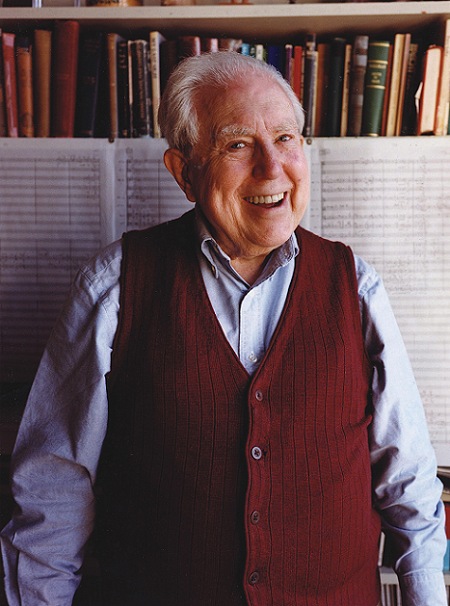
wolff-kotik

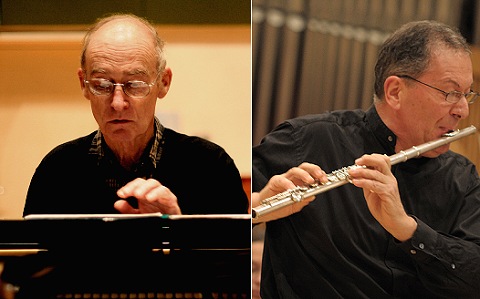
The S.E.M. Ensemble will open its 40th anniversary season with its annual Christmas concert at Paula Cooper Gallery in New York City on Tuesday, December 15. SEM has performed a holiday concert at the gallery for the last 25 years, and this year’s program will feature two N.Y. premieres by new-music icon Christian Wolff (above left), the first public performance of Petr Kotik‘s (above right) new percussion work performed by TimeTable Percussion, and Lejaren Hiller‘s rarely heard String Quartet no. 5, along with a work by J.S. Bach.

Christian Wolff is also marking his 75th birthday this year, and has put together a kind of celebratory all-Wolff concert at Roulette on Dec 12th. Christian was kind enough to write a bit about  his music on both of these concerts:

On December 15, the S.E.M. Ensemble will perform two New York premieres of my work: “Flutist (with percussionists)” and “For John”, as part of their annual concert at Paula Cooper Gallery (NYC). This will be one more in a long line of performances of my music by Petr Kotik and the S.E.M. Ensemble, beginning, I think, in the early 1970s, not long after Petr came to Buffalo – he had already organized the first performance of an early piece of mine in Prague in the 60s. There has been an extraordinary continuity of support. And, with this encouragement, I’ve also written pieces for the ensemble, as well as for the orchestra associated with it (the S.E.M. Orchestra in New York).

“Flutist (with percussionists)” came about when Chris Nappi, longtime percussionist for the SEM ensemble and friend, asked me for a piece – in exchange for music copying he had done for me. He wanted something to play with another percussionist, so the music is for more than one player. Then Petr Kotik, composer, conductor and excellent flutist, had me at his Ostrava (Czech Republic) New Music Days in 2003. I can’t exactly remember, but I think he was looking for some additional music for one of the concerts, so I made solo flute music for him, and then, since Chris was also there, it occurred to me the two pieces could be done simultaneously. Each piece has pauses of free duration, determined in the process of playing by the performers, so that they can be free to space their material in relation to one another, improvisationally. In addition, the flute material consists of a collection of shorter units which can be played in any sequence, as the player decides, and sometimes repeated, so that’s another element in ‘improvising’ the relation of the two pieces.

“For John” was written as part of a collaborative piece titled “For John” in celebration of John Cage at Bard College a few years ago (when the John Cage Archive was relocated at Bard). My contribution was a small set of piano nocturnes and “Material”, music playable by any smaller collection of performers (instrumentation not specified). The others collaborating were David Behrman, John King and Takehisa Kosugi, who played their own work simultaneously with mine, and intermittently we all played from the “Material”.

Then on Saturday, December 12, at 8:30 pm there will be a concert of my music at Roulette. The main item on the program will be the premiere of a new piece “Quintet”, written especially for this occasion.

After an earlier New York concert of my music, which was ok, but not quite ideal, I thought why not try to collect some of my favorite musicians who might be available in the New York area. 2009 is also the year of my 75th birthday, so this might also be a kind of celebration. The musicians are Larry Polansky, composer, long-time friend and colleague in Hanover, New Hampshire (but we both grew up in New York), and fine guitar player; Robyn Schulkowsky, also a longtime friend with whom I’ve done a lot of music, regarded in Europe as the premiere percussionist for new music, but also long associated with people like John Cage and Morton Feldman, and a great improviser; Robert Black, double-bass, also someone with whom I’ve worked over a long time, probably best known as an anchor of the Bang on a Can All-Stars. We also have all been involved in recordings of my music (Robert a CD of all my music involving double-bass, Robyn a solo percussion CD and she and Larry more recently on a recording of 10 “Exercises”). The other player, along with myself (on piano and melodica) will be Joey Baron, drummer, associated for years with John Zorn, but even better known as jazz drummer in his own right. Joey had been hearing my music in the last years and said he liked it, so it occurred to me to ask him to join us, and he agreed – a challenge for both us, me writing for a ‘non-classical/new music’ performer, him playing such music. The element of improvisation, or structural flexibility in my music I hope will provide a bridge.

The rest of the program will consist of earlier pieces, a double-bass solo “Look She Said”, a solo snare drum “Peace March”, and an electric guitar piece “Another Possibility,” written to make up for my losing (it was stolen) the only existing copy of a piece by Morton Feldman, “The possibility of a piece for electric guitar.”

Thanks Christian, Happy (late) Birthday, and have a great show or two!  More information for the S.E.M. concert can be had here; for the the Roulette gig click here.

Composers, Concerts, Contemporary Classical, Contests, New York

New works, Free tix!

contact1

This month kicks off the New York Philharmonic’s Contact! series. Concerts in December and April feature seven composers and seven premieres, played first at Symphony Space and then a day or two later at the Metropolitan Museum of Art. The Phil tells us that “performances will include personal introductions to the music from the composers themselves, in a less formal and more intimate setting.”

The list is a really great mix of styles and careers from a few different continents: The December 17 and 19 concerts feature music by Marc-André Dalbavie, Arthur Kampela, Lei Liang and Arlene Sierra, conducted by Magnus Lindberg; then on April 16 and 17 Alan Gilbert leads the musicians and baritone Thomas Hampson, with works by Nico Muhly, Matthias Pintscher and Sean Shepherd.

And the New York Philharmonic would like a few lucky souls to come hear it for free! We have three pairs of tickets to the Dec 19th 7p.m. concert at the Met Museum, and we’d like to give them away to the first three correct answerers of these five questions:

1) In 1998 Marc-André Dalbavie was named “Best Young Composer of the Year” by what rather surprising U.S. source?

2) Which Arthur Kampela piece did pianist Jenny Lin record for her Koch CD “The Eleventh Finger”?

3) At what age did Lei Liang begin composing?

4) Arlene Sierra‘s first orchestral work won the 2001 Takemitsu Prize and was performed by the Tokyo Philharmonic; what was the title of the piece?

5) In 1980 Magnus Lindberg and Esa-Pekka Salonen together formed an experimental performance ensemble; what was its name?

Send your five answers directly to me at: stevelayton@niwo.com (not to the S21 email, or they could be lost in the administrative shuffle!). The three winners will have tickets waiting for them at the box office.

I have links to all the answers of course, but I’ll only post them next Tuesday (hey, they’re not hard at all, and I think a little effort on your part is a darn good thing!).

And for those that miss out, I think we’ll be able to do the same thing all over again in April. Happy hunting!

Contemporary Classical, Festivals, Los Angeles

Last Night in L.A.: Zappa and Partch and the Festival’s Midway

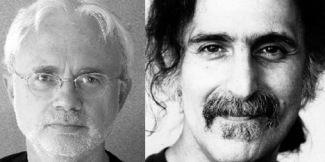
a-zLast night’s Green Umbrella concert was programmed as part of “West Coast, Left Coast”, and it certainly sounded as if almost all of the 1500-or-so of us had as much fun as I did. The program ended on a high with five selections from Frank Zappa‘s The Yellow Shark album (1992), conducted by John Adams, our festival curator (and conductor, and occasional composer, and friendly guide). You can read Adams’ comments made during rehearsals here (just read the second half of yesterday’s entry and then scroll down to the November 25 entry). The concert ended with a riotous (orgasmic?) performance of “G-Spot Tornado”, which was then repeated as an encore. Adams finally led the orchestra off stage, because very few of us in the audience were headed for the exits, instead staying and applauding and wanting more.

The Phil has had a long association with the music of Frank Zappa, going back to 1970 when Zubin Mehta was music director and Ernest Fleischmann had started his program of bringing contemporary music into the Phil’s repertoire and helping the Phil’s audience listen to the new. (Ernest and others had to cultivate the ground for many years before the current audience was built up; you in New York should not get too impatient.) As the program for last night states, that 1970 concert was “locally notorious”. Here are Zappa’s comments. Some uncredited and undated but contemporary comments are here if you scroll down to the heading “Hit It, Zubin”, and here is a funny article from a 1971 Playboy concerning the first Zappa concert. (Confession: Phil concerts have been my only exposure to the music of Frank Zappa.)

The concert opened with Fog Tropes (1981) by Ingram Marshall, an accessible work for six brass and taped sounds of fog horns and San Francisco in fog. Then Kronos Quartet with the astounding voice of David Barron performed Ben Johnston‘s 1998 transcription of Harry Partch‘s 1943 U.S. Highball, originally written for adapted guitar, kithara and chromelodeon. Johnston worked hard enough to support Partch and his work, especially at the U of Illinois, that I trust his instincts in agreeing to make this work more performable by replacing the original instruments. This was a delightful performance, and David Barron’s unique pitch control and his acting skills made him a great narrator.

Sunday the Festival gave us two concerts. In the afternoon, the Phil and Gustavo Dudamel showed us that the powers had recorded the wrong concert when they taped the inaugural concert and John AdamsCity Noir symphony. That first night gave us a good performance; Sunday (the fourth performance of the work) gave us an exciting performance of the absolutely best orchestral work yet written by John Adams. On Sunday, the “big band” and jazz elements had swing while still retaining drive. The work built into a great evening. The concert began with Dudamel conducting Esa-Pekka Salonen‘s pivotal L.A. Variations (1996). And then the strings, trombones, harps, and percussion (re-tuned as appropriate) with Marino Formenti on the piano in Lou Harrison‘s Piano Concerto (1983-1985). Darn! There should have been a recording of this performance. The second movement, “Stampede”, was thrilling in its breath-taking drive; we relished the change into the almost ethereal slow movement. The whole performance was great, for a work that should have a larger audience. We think of those Sunday afternoons after a concert when we saw Harrison at Betty Freeman’s musicales; these were the first performances by the Phil of this concerto.

And then Sunday evening the four pianists of PianoSpheres (Gloria Cheng, Vicki Ray, Mark Robson, Susan Svrcek) gave us “California Keyboard”, a survey of some of our music. The opening work was instructive. The spotlights shone on four toy pianos as the four pianists came on stage and bent down to the keyboards for John Cage‘s Music for Amplified Toy Pianos (1960). Initially there were some titters: the sounds were a bit odd and the sizes were humorous. But four pianists, focused on the music, brought the audience from humor into music appreciation, and the performance cast a spell. Mark Robson then played the oldest works: four of Henry Cowell‘s Miniatures (1914 to 1935), and we heard how original Cowell was, and how modern he could be.

But there was so much in the program. My own favorites included a concerto-like work for piano and electronics by Shaun Naidoo, Bad Times Coming (1996), played by Vicki Ray. I also really liked William Kraft‘s Requiescat (Let the bells mourn for us for we are remiss) (1976), commissioned by Ralph Grierson and premiered at the 1975 Ojai Festival. This was a lovely work for electric piano. And the concert closed with a beautiful work by Daniel Lentz, NightBreaker (1990) for four pianos. A great concert!

Mr. Adams, Ms. Borda: you put on good festivals!