Composers

CDs, Chamber Music, Composers, Contemporary Classical, Other Minds, Recordings

Between the Rocking Cradles

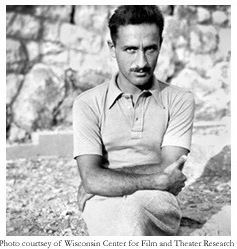
Given the rarity of records and performances of the music of Marc Blitzstein (1905-1964) through the 1970s, my first encounters with him were like everyone else: references in the “populist music of the 30s and 40s” section of 20th-century history books, and as arranger of the American version of Kurt Weill’s Threepenny Opera that we all knew from the old (& wonderful) original-cast recording. Works such as his iconic The Cradle will Rock and Airborne Symphony were still talked about, but quite hard to track down and hear. It wasn’t until the mid-80s that revivals and reassesments began, with good biographies coming even later.

Though his trajectory parallels Weill’s or Copland’s in some way, moving from serious, cutting-edge classical to more readily accessible forms derived from popular music and musical theater, Blitzstein stuck with the agitator’s role to the end: works with a strong social message, whether against dictators of fascism or capitalism, and solidarity with the dispossesed and outsider. His reward as a political outsider was to be blacklisted in the red-scare 50s; and as a sexual outsider (though married, Blitzstein was rather openly gay) to be beaten to death in Martinique.

But before all that, there was the 20-something student from a well-to-do Jewish family, studying in Europe with both Arnold Schoenberg and Nadia Boulanger. This younger self, as John Jannson’s Blitzstein website writes, was “a self-proclaimed and unrepentant artistic snob who firmly believed that true art was only for the intellectual elite. He was vociferous in denouncing composers – in particular Kurt Weill – whom he felt debased their standards to reach a wider public.”

That young, arty-elitist composer is the one that our good friends at Other Minds have set out to document, with a new CD hitting the shelves May 12th. Titled First Life, it contains a number of unpublished and barely-heard works from the late 20s and early 30s, given passionate performances by pianist Sarah Cahill and the Del Sol String Quartet. This is smart and energetic music, filled with then-experimental flourishes, and well worth putting on your shelf or in your playlist.

WNYC’s Sara Fishko recently profiled the CD, as well as the rest of the great Other Minds CD catalog, on her The Fishko Files program; it’s still up for listening here.

Chamber Music, Composers, Contemporary Classical, File Under?, Orchestral, Orchestras, Performers

Review — S.E.M. Excitment at Tully

Music by Wolff, Sciarrino, Kotik, Carter, and Ligeti / Orchestra of the S.E.M. Ensemble, Ostravská Banda, FLUX Quartet; Petr Kotik, Conductor /Alice Tully Hall, May 6, 2009

Conductor/composer Petr Kotik has been an impressive advocate for contemporary music in New York for forty years. Residing in the US since 1969, he has been running the S.E.M. ensemble since 1970: performing a wide range of repertoire, commissioning works and cultivating successive generations of young players into seasoned new music performers. S.E.M.’s orchestral unit has been active since ’92; Kotik’s also been running Ostravská Banda, an international chamber orchestra comprised of S.E.M. players and young European counterparts, since ’05. Both of these groups, as well as the FLUX string quartet, another youngish ensemble devoted to new music, were featured on Wednesday night’s Tully Hall performance: a program of brand new chamber music and three contemporary works that seem destined for the core repertory.

Christian Wolff’s Trio for Robert Ashley (commissioned for the concert) employed three of the FLUX members – violinist Tom Chiu, violist Max Mandel, and cellist Felix Fan – in a fragmentary multi-movement piece. Indeed, its juxtaposition of seemingly unrelated musical materials set the tone for an evening devoted to unorthodox formal presentation. Sustained notes were set against skittering, Webernian motifs. Single lines evaporated into pensive rests while vigorous tutti were all too ephemeral; evaporating into the silence from when they came.

In its US premiere, Salvatore Sciarrino’s Vento D’Ombra made quite an impression. Another work which employed silences as well as fragmentary gestures as signatures, it focused on tiny musical cells – mostly dyads and trichords – as well as a cornucopia of special effects. Wind and brass players breathed through mouthpieces without fingering notes, strings played scordatura and microtones. The whole was a meticulously shaded pointillist canvas of brief gestures, undulating slides, and pianissimo staccato dabs.

Kotik’s own String Quartet was cast in a lengthy single movement. Impeccably performed by FLUX, it was centered on an ambling, long-breathed melody played by the quartet in unison (later in octaves). Only gradually did this evolve into two-voice counterpoint, with a violin countermelody that took on greater urgency. Tutti passages ratcheted up the tension quotient still further, evocative of some of the brilliant polyphonic passages from Ligeti’s second quartet. The idée fixe unison passage returned at pivotal junctures, requiring precise coordination and tuning on the part of FLUX: both were readily supplied.

Elliott Carter’s recent ‘second piano concerto,’ Dialogues, is a fascinating companion piece to the monolithic concerto from the 1960s. Written for a much smaller orchestra, it allows the soloist to take on an enlarged role. In a clever inverse of its larger precursor, the pianist often overwhelms the ensemble, cowing it with brilliant virtuosity. Daan Wandewalle was an excellent protagonist, supplying brilliant cadenzas, thunderous verticals, and an overarching sense of shaping and musicality. (more…)

Composers, Concerts, Contemporary Classical

Thanks for All the Fish

As stated in Oberlin College’s ‘Oberwiki’:

“…to enter you needed to take a sugar pill with a dot on it…and you rolled the dice, cause 1/3 of the dots were LSD…

Yep, that’s our (currently) eldest composition teacher speaking of Oberlin’s glory days when he was but a wee lad out of grad school. Randy Coleman is many things, best summed up as “a real post-modern feminist old-time patriarch from Virginia.” He is most feared for his red pen marks on freshperson’s melody assignments and for the fabled “piece-per-day” routine with private students. His music contains much variety, with each new piece vastly different than what had come before. Also, as a result, he takes a long time in writing these pieces.

For the past 15-20 years, every course that Randy has taught has been called “Postmodernism.” He has taught at Oberlin since 1965, placing him as the conservatory professor with the second-longest post at Oberlin, second only to David Boe.

After forty-three years of showing impractical, starry-eyed composition students how it’s really done, Randy Coleman is moving on. A fine appreciation is here; On Friday May 8th at 8pm, The Contemporary Music Ensemble there is giving an all-Coleman farewell concert bash, featuring Bellagio (2007-09), a concerto for piano and large ensemble with Ran Duan, piano; Apparitions (2003) for string ensemble and piano, Tom Fosnocht, piano with videodance by Nusha Martynuk and Carter McAdams;  Soundprint III (1973),  in memoriam Ezra Pound for dancer and percussion, Nusha Martynuk, dancer; The Great Lalula (1988) for voice and chamber ensemble, Molly Netter, voice, with dance choreographed by Nusha Martynuk and performed by Cleveland GroundWorks Dance Company. It’s at Hall Auditorium, Room ID_1 @ 67 North Main Street, Oberlin, OH, and absolutely free.  If you’re close come on by; this composer gave in a big way, and it seems only fair to give back.
Composers, Interviews, Performers, Podcasts, viola

My Ears Are Open. This week on the podcast: Elizabeth Weisser

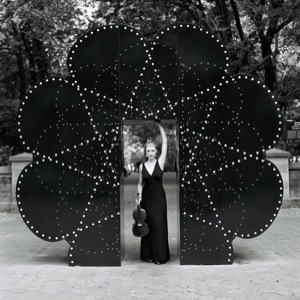
As promised, during the month of May I’ll be talking exclusively with violists, beginning with Elizabeth Weisser of the iO Quartet. I swear it’s a total coincidence that, two weeks in a row, I’ve talked with musicians who had great experiences with Helmut Lachenmann (and I already know there will be one more mention this month). Elizabeth does have lots of other things for us to think about, though, for instance: when a composer brings material to a musician, the musician improvises, and the composer notates the improvisation, then whose music is it? She also asks, “What’s the core of what we do? What’s the main thing we are trying to get across? And, why?”

Looking ahead, the week of May 17 will be my interview with violist Nadia Sirota and the week of May 31 will be violist John Pickford Richards.

Want to take a listen? Subscribe in iTunes here, or point your blog-readers here. You can also find it on instantencore by clicking here.

Composers, Concerts, Contemporary Classical, File Under?, Music Events, New York

2+2=5: Christopher O’Riley at Miller Theatre

Christopher O’Riley performs his final recital in the 2+2=5 Series tomorrow night at Miller Theatre. Each of the programs has featured a pairing of a classical composer and O’Riley’s transcriptions of songs by a pop musician.  Thus far, the recitals have featured Shostakovich / Radiohead & Debussy / Nick Drake. Tomorrow’s program pairs Schumann and Elliott Smith.

Yesterday, O’Riley released a digital single on iTunes of his interpretation of Kurt Cobain’s Heart Shaped Box. It’s featured on the iTunes’ “Rock” page! On May 5th the digital single will be widely released to other music download sites. A Heart Shaped Box ring tone can be created at iTunes and will be available through major cellular carriers by May 5th.

O’Riley played HSB as the encore for his Debussy/Nick Drake recital at Miller. He really wails the stuffing out of it!

Competitions, Composers, Concerts, Contemporary Classical

Pictures 2009 Concert at MaM Sunday

Elsie Driggs’ Queensborough Bridge, 1927.

Pictures 2009 Concert: New Jersey students explore the intersection of music and visual art.

Sunday, April 26, 2pm (Pre-concert Panel at 1:30pm)

Montclair Art Museum/NJAC

3 South Mountain Avenue, Montclair, NJ

$15 Adults / $10 Students / Online Tickets Available here.

For the fourth annual edition the Pictures Composition Contest, New Jersey students were asked to compose music inspired by visual art exhibited in the Montclair Art Museum. EXIT 9 Percussion Group will perform quartets written by the students.  In addition, they will premiere the 2009 Ionisation Commission, SPAN, by Darren Gage.

Composers

Terry Riley Plays the Big Room – Tomorrow

To celebrate the 45th anniversary of In C, the Kronos Quartet is “curating”  a star-studded gathering of musicians who will perform In C in Stern Auditorium at Carnegie Hall for the first time tomorrow (Friday) night.  This once-in-a-lifetime concert has an ensemble that includes Kronos Quartet, Terry Riley, and original In C performers Stuart Dempster, Jon Gibson, Katrina Krimsky, and Morton Subotnick.

Not to mention: Ustad Mashkoor Ali Khan, Sidney Chen, Dennis Russell Davies, Loren Kiyoshi Dempster, Bryce Dessner, Dave Douglas, Trevor Dunn, Jacob Garchik, Philip Glass, Osvaldo Golijov, Michael Harrison, Michael Hearst, Scott Johnson, Joan La Barbara, Saskia Lane, Alfred Shabda Owens, Elena Moon Park, Lenny Pickett, Gyan Riley, Aaron Shaw, Judith Sherman, Mark Stewart, Kathleen Supové, Margaret Leng Tan, Jeanne Velonis, Wu Man, Yang Yi, Dan Zanes, and Evan Ziporyn.  Also with Koto Vortex, Quartet New Generation, So Percussion, members of the GVSU New Music Ensemble, and members of the Young People’s Chorus of New York City.

Tickets start at $21.  Read more about it at Sidney Chen’s blog or the Kronos Facebook page.

Bang on a Can, Composers, Contemporary Classical, Downtown, Music Events, New York, Online

Want some free tracks & tix? The hunt is on!

Apropos this Wednesday’s Michael Gordon Trance performance mentioned just a few posts previously:  Besides the pre-concert talk and videotaping, we’ve got a bit more fun for you all…
Along with the good folk at Bang On A Can and Cantaloupe Records, Michael Gordon himself had the idea of offering the tracks to Cantaloupe’s Trance CD, performed by Icebreaker, as free downloads for you all. The only catch: Each of the seven tracks are hosted at a different blog, and it’s up to you to follow the clues to find all seven.

Besides the music itself, there’s a further reward for the quick: the first three people to correctly identify all seven blogs in an e-mail to promotion@firstchairpromo.com will receive a free pair of tickets to the April 22nd concert at Le Poisson Rouge!

We get to lead off the hunt with the simplest clue of all: a link directly to the first track. And to get to the next blog & track you only have to decipher this:

The most famous bridge in New York City carries the name of this borough, where a person who avoids eating any animal product like the plague blogs about all events musical, metal, comedy — or whatever’s happened to grace the fair city this or that week.

Those wishing to experience the full sonic glory of the physical Trance CD can purchase it here. Good luck!

Chamber Music, Composers, Contemporary Classical, Experimental Music, Interviews, Music Instruments, New York, Percussion, Performers, Podcasts

My Ears Are Open. This week on the podcast: Alex Lipowski

It’s hard to imagine a percussionist that you would want to perform your music more than Alex Lipowski. Alex has a passion for the new, the challenging and the unusual and I find him to be one of the most inspirational musicians I’ve ever met. He spent much of our time together explaining how important it is to take risks and to find new and innovative sounds — good advice. You can see Alex and the Talea Ensemble on April 28 at the Players Theatre, 115 Macdougal Street, NYC.

Looking ahead, there will be three episodes in May and I’ll be devoting the month to violists. Check back on May 3 and see what Beth Weisser of the iO Quartet has to say.

Not sure where to find the podcast?

– Subscribe in iTunes here

– Subscribe with your RSS reader here

– Find it on InstantEncore here

P.S., If you were not able to make it to the bake sale then you missed out on a very special event. Even if you don’t care for all the music it’s hard to deny the sense of community from having so many different groups all in the same room – we are all in this together! Tip of the hat to Newspeak and Ensemble de Sade for making it happen.